

Navigating the Future of Cannabis Payments
You can tap a smartphone to buy a $6 latte in seconds, yet walking into a sleek, modern cannabis dispensary often means hunting for an ATM in the corner. We have all been there: standing at the register, paying a $3 fee just to spend our own money. Navigating the bizarre world of cannabis payments leaves many shoppers wondering why this booming industry relies on outdated technology.
This checkout glitch stems from a massive legal conflict between state and federal law. Think of the situation like a classic “parent versus school” divide. Your school (the State) says you can bring a specific snack to class, but your parents (the Federal Government) strictly forbid it. The school will not punish you, but the people managing your allowance—the major banks—are terrified of angering your parents. This fundamental clash explains why dispensaries need banking reform just to process standard credit cards.
According to federal policy data, this lack of financial support forces countless legal shops to operate almost entirely in physical cash. Moving heavy bags of paper currency creates serious security risks, putting both small business owners and everyday consumers in vulnerable positions at the storefront.
Fortunately, this frustrating counter experience is starting to evolve as digital workarounds gain momentum behind the scenes. Anyone following cannabis payments news today can see that a vital transition from cash-only registers to secure, seamless digital solutions is finally on the horizon for shoppers.
The Invisible Wall: Why Major Banks and Credit Cards Still Say No to Cannabis
While many state governments have given cannabis retail stores the green light, the federal government still classifies the plant as an illegal substance. Because of this federal ban, major credit card networks like Visa and Mastercard refuse to process these transactions. If a national bank handles money from a federally prohibited business, the government can view those deposits as money laundering. That massive legal threat makes finding standard marijuana business banking solutions incredibly difficult for legitimate, tax-paying shop owners.
Financial institutions essentially slap a heavy warning label on the entire industry. Even though a dispensary sells strictly regulated goods, traditional banks turn them away, forcing them to use specialized, expensive high risk merchant accounts. Unlike a neighborhood bakery, these stores are locked out of everyday cannabis financial services, forcing them to operate heavily in cash.
This invisible wall between state law and federal banking rules ultimately impacts your wallet at the checkout counter. Since standard credit cards are blocked, dispensaries have to rely on clever digital loopholes to accept anything other than paper bills.
Decoding the ‘Cashless ATM’: Why Your $53 Purchase Costs $60 at the Counter
Wondering how shops manage to accept debit cards at dispensaries despite the federal ban? They rely on a clever digital loophole. While the counter terminal looks completely normal, the cashless ATM vs point of banking debate is really just two names for the same trick: making your bank think you are withdrawing money from a traditional cash machine. This workaround remains the foundation of modern marijuana payment processing.
Because regular ATMs only dispense flat bills, this digital system forces your transaction to do the exact same thing. Here is what happens behind the scenes when you buy a $53 product:
The Swipe: You insert your card and securely enter your PIN.
The Round-Up: The terminal rounds your $53 total up to the nearest ten, authorizing a $60 withdrawal.
The Fees: A convenience surcharge (usually $2.50 to $3.50) is tacked onto your bank statement.
The Change: The cashier hands you your items along with $7 in physical cash from the register.
Those extra processing charges might feel frustrating, but they are the immediate cost of bypassing traditional network rules. Since credit companies block direct retail sales for cannabis, the store essentially acts as a human ATM. Your bank charges an out-of-network withdrawal fee, and the terminal provider takes a cut for operating this complex financial machinery.
Eventually, the novelty of getting crumpled bills back with your receipt wears off. Shoppers and business owners are both tired of the clunky rounding math and hidden withdrawal costs. Fortunately, the industry is already moving past these makeshift workarounds as ACH payments and mobile apps modernize the dispensary experience.
Skipping the ATM Line: How ACH Payments and Apps Are Modernizing the Dispensary
You no longer have to accept clunky workarounds or pay unnecessary withdrawal fees just to buy a pack of gummies. As the industry matures, forward-thinking shops are finally adopting true cannabis payment solutions that feel exactly like using your favorite modern checkout technology.
The secret behind this upgrade is a network called the Automated Clearing House, or ACH. In the standard retail world, this is the exact same secure system you use to pay your utility bills online or receive direct deposits from your employer. By adapting ACH payments for cannabis, retailers can bypass restrictive credit card networks entirely and move money directly from your bank to theirs.
Instead of swiping a plastic card, you simply download a dedicated dispensary payment app to your phone. Before you even walk into the store, you securely link your checking account to this newly created digital wallet. When it is time to check out, you just scan a QR code at the register, approving the exact purchase amount with a single tap.
This streamlined approach offers massive advantages for both your wallet and your peace of mind. Because integrated cannabis payments process the exact total directly through your bank, there is no confusing rounding math, no surprise withdrawal surcharges, and no awkward physical change handed back over the counter. Furthermore, your financial data stays heavily encrypted within the digital wallet rather than being exposed at a public terminal.
Beyond saving you a few dollars in fees, shifting away from physical currency solves a much darker problem for the industry. While digital wallets protect your personal data, they also protect the neighborhood by addressing the real cost of cash and physical theft.
The Real Cost of Cash: Why Your Local Dispensary Is a Target for Crime—And How Digital Payments Fix It
Stepping into a modern cannabis shop often feels more like entering a high-security vault than a neighborhood pharmacy. You might notice the heavy double doors, the ID scanners, and the prominent security personnel stationed near the register. This fortress-like atmosphere isn’t just for show; it is a direct response to severe dispensary cash management risks. Because federal rules force many of these businesses to operate entirely in physical bills, a busy store can easily accumulate tens of thousands of dollars by closing time, making them highly visible targets for theft.
This reliance on physical currency creates a massive financial and logistical burden that eventually trickles down to the consumer. To protect all those dollar bills, retailers must pay for several “hidden” security expenses, including:
Armed security guards to patrol the storefront and protect the staff.
Specialized armored trucks to securely transport daily deposits.
Hours of extra administrative labor dedicated purely to counting and verifying cash.
Modern digital checkout options actively remove the bullseye from the backs of these local businesses. When reliable cannabis merchant services process transactions electronically, the volume of physical currency held on-site drops dramatically. Neighborhoods with digitally integrated shops report fewer armed robberies and safer environments for both employees and shoppers. By simply paying with an app instead of physical bills, you directly contribute to a safer retail environment.
Ultimately, removing piles of currency from the counter brings crucial payment transparency to an industry forced to operate in the shadows for far too long. As state-level technology proves that secure transactions are possible, lawmakers are finally pushing federal legislation to standardize these protections.
The SAFE Banking Act: How Federal Legislation Will Make Your Next Visit Feel Like a Trip to Target
The proposed SAFE Banking Act acts as a powerful safety shield for financial institutions. Think of the current conflict like a strict parent and a lenient school; the state allows the business, but the federal government still forbids it. Banks currently avoid the industry because they fear punishment from the federal parent.
Creating a legal safe harbor provision changes everything by officially protecting financial institutions from being penalized just for serving state-legal dispensaries. Once banking partners achieve basic SAFE Banking Act compliance, they will no longer face the threat of federal raids. This legal barrier allows national banks to treat a local dispensary exactly like a neighborhood grocery store.
So, when will you be able to simply swipe your everyday rewards card at the checkout counter? While untangling complex marijuana financial regulations takes time, recent legislative momentum suggests a breakthrough is nearing. Once the law passes, financial experts predict standard credit card processing will arrive in stores within a year.
Until those federal protections are officially signed into law, everyday shoppers still have to navigate a slightly confusing landscape at the cash register. Thankfully, there are several convenient ways to manage your purchases today.
Your Roadmap to a Smarter Shopping Trip: Navigating Current Payment Hurdles While We Wait for Reform
Instead of viewing the awkward dance at the dispensary register as a random hassle, you can now strategically navigate cannabis payments. Cash remains the reliable but risky choice, while debit cards offer convenience wrapped in heavy fees. Linking your bank account directly through ACH is the smartest, most cost-effective play, even if it requires a little setup.
Understanding this landscape allows you to create a personal strategy that saves you money and frustration. Rather than letting unexpected ATM charges eat into your budget or feeling confused when your receipt looks strange, take complete control of your next checkout experience.
To make your next visit seamless, try using this simple Pro-Shopper Checklist:
Check the website first: See if the store offers digital bank transfers (ACH) so you can skip the ATM entirely.
Bring your debit card: Keep it handy as a reliable backup, knowing your standard credit card will be declined.
Expect the fees: Anticipate out-of-network withdrawal charges or rounding fees if you use a card at the counter.
As modern cannabis payment services mature, this everyday friction at the register will slowly disappear. The rapid growth of fintech for weed retailers is already replacing clunky workarounds with smoother, app-based solutions that feel just like paying for your daily coffee.
Explore Related Guides and Tools
If you are building a fuller picture of how cannabis businesses operate day to day, these adjacent topics connect directly to payments, compliance, and the customer experience. The sections below are written to make it easy to link out to deeper guides on your site.
Does insurance cover medical cannabis?
Payment questions do not stop at the register—patients also want to know whether medical cannabis is reimbursable like other therapies. Coverage can vary widely by plan type, state rules, and whether a product is classified as a prescription drug versus an out-of-pocket wellness purchase. If you serve medical customers, a clear explainer on does insurance cover medical cannabis helps set expectations before patients arrive and can reduce checkout friction when a patient is surprised by total cost. Read our guide: Does insurance cover medical cannabis?
POS system for CBD
CBD retailers often sit in a gray zone: products may be legal, but banks, card networks, and processors still apply extra scrutiny. A dedicated comparison of a POS system for CBD can help merchants choose hardware and software that support compliant product catalogs, tax settings, inventory, age gates where needed, and processor integrations that do not suddenly get shut off. If you are advising retailers, this is also a natural bridge into broader discussions of merchant accounts and chargeback prevention. Read our guide: POS system for CBD retailers
Best loyalty programs for frequent cannabis purchasers
Loyalty is where payments and marketing overlap. The best programs tie a customer’s purchases to a single profile, support tiered rewards, and work smoothly whether someone pays with cash, debit workarounds, or an ACH wallet. A practical roundup of the best loyalty programs for frequent cannabis purchasers can highlight what matters most: compliant data collection, simple redemption at checkout, and integrations with modern dispensary payment apps. Read our guide: Best cannabis loyalty programs
Cannabis industry market research
Payment trends are ultimately a reflection of the broader market: where demand is growing, how consumer preferences are shifting, and which state programs are expanding. A post on cannabis industry market research can give readers a “big picture” view—sales forecasts, category growth, regional differences, and the policy signals that move capital and banking appetite. That context makes payment coverage more credible because readers can see why new solutions appear (or disappear) as the industry evolves. Read our report: Cannabis industry market research
Cannabis licensing consultancy
Many payment challenges start long before a store opens—at licensing, entity structure, and compliance planning. A page on cannabis licensing consultancy can explain how consultants help with applications, local approvals, operating plans, and compliance systems that financial institutions want to see before onboarding a merchant. For new operators, this can be the missing link between “we got approved by the state” and “we can actually accept modern payments safely.” Read our guide: Choosing a cannabis licensing consultant
Cannabis tracking system
Seed-to-sale tracking is not just a compliance box; it shapes how inventory, receipts, and reporting flow through a business. A guide to a cannabis tracking system can cover what states require, how integrations work with POS and payment solutions, and how clean, auditable data reduces operational risk. For multi-store operators, tying tracking, POS, and payments together is often the difference between a smooth closeout and nightly reconciliation chaos. Read our guide: Cannabis tracking systems explained
The era of hunting for cash before buying your favorite products is fading. As legislation catches up with reality, financial normalization will transform this industry. Until then, each time you step to the register armed with your new strategy, you can confidently navigate the quirks of an industry in transition.
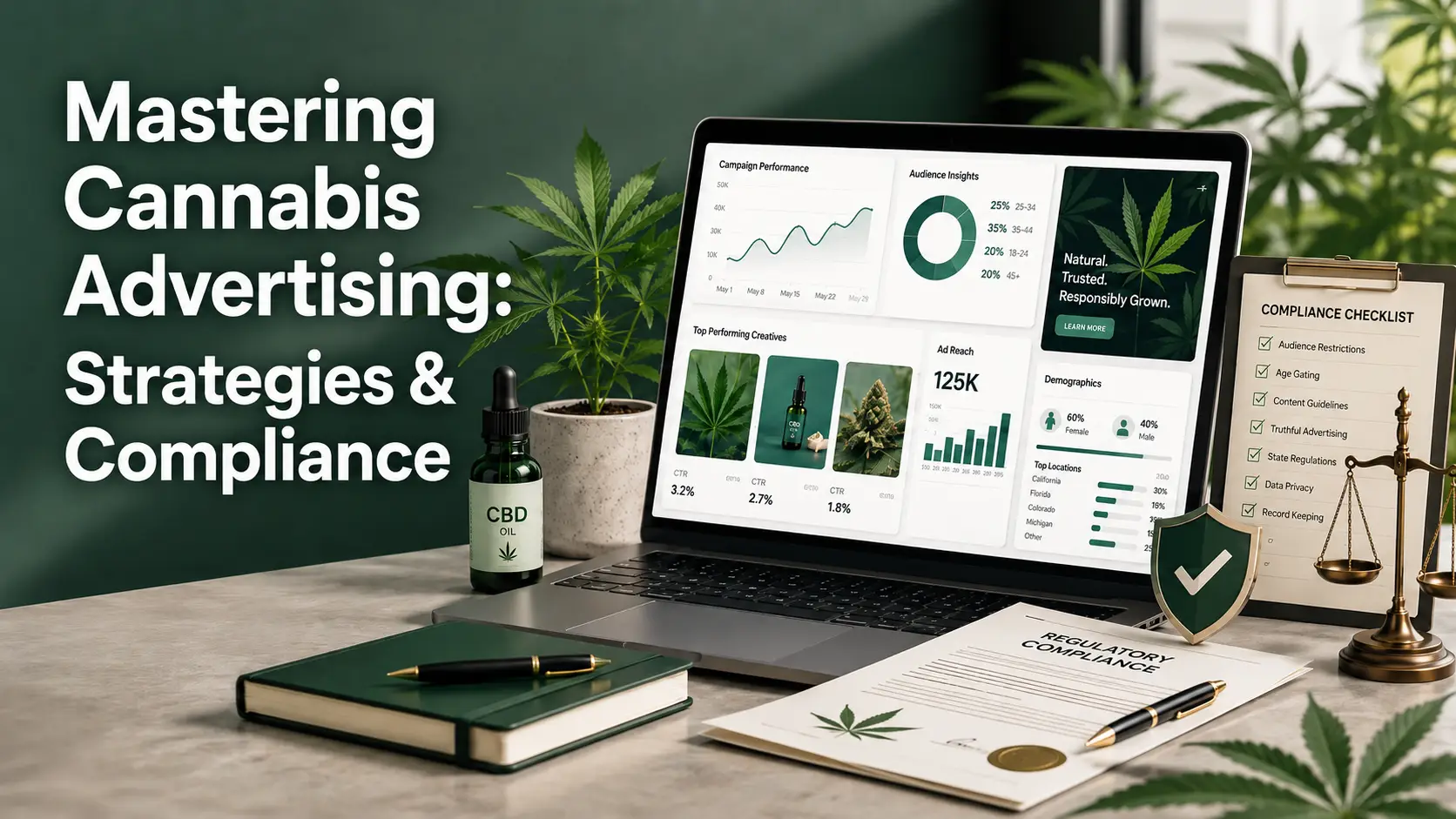
Learning more about cannabis advertising regulations is essential for any dispensary, CBD retailer, or cannabis-related business that wants to grow without creating unnecessary compliance risks. Since cannabis laws can vary by state and advertising platforms often have strict rules around cannabis, businesses need to be careful with product claims, promotional language, age-sensitive messaging, and where their ads appear. Understanding these regulations can help cannabis brands market more responsibly, avoid account restrictions, protect their payment and banking relationships, and build stronger trust with customers. As the industry continues moving toward safer digital payments, better compliance systems, and more professional retail operations, advertising compliance should be treated as a key part of long-term cannabis business growth.