

Navigating Cannabis Licensing: Expert Consultancy Insights
Starting a neighborhood bakery requires a commercial kitchen and a basic health permit. Launching a cannabis business, however, feels like peering into a regulatory “black box” where the rules constantly shift. Many assume getting approved is just a matter of filing forms and paying fees at city hall. In reality, it involves navigating a massive web of local zoning laws and strict security requirements before you even sign a lease.
Industry data reveals that this complexity traps countless ambitious founders who try managing the process alone. According to historical market analyses, competitive states often see sub-10% success rates for initial marijuana permit applications when entrepreneurs attempt the DIY route. A single missing document can quickly transform a business dream into an expensive rejection letter. This high failure rate happens because applicants must simultaneously master three distinct pillars of licensing: local approval, state mandates, and operational readiness.
Overcoming this unforgiving terrain requires a “Licensing Sherpa” to lead the way. Partnering with a cannabis licensing consultancy is essentially like hiring an expert mountaineer to guide you up a treacherous peak. The mountain represents the sheer volume of compliance regulations, while the consultant is the experienced guide who has climbed it before, knowing exactly where the hidden cliffs lie.
Bridging the critical timeline between a concept and an operating storefront demands professional strategy. A dedicated guide transforms an overwhelming wall of paperwork into a clear path forward. By trusting experts who understand the landscape, founders protect their investments and drastically increase their chances of securing a legal marijuana business license.
Beyond the Application: What a Cannabis Consultant Actually Does for Your Business
Many aspiring business owners believe that receiving state approval is the finish line. In reality, securing the permit is just the starting gun, and the ongoing regulatory demands can quickly overwhelm a new operator. This is where a cannabis licensing consultancy proves its true worth, shifting your focus from simply “getting in” the industry to “staying in.” While justifying professional consulting costs might initially seem daunting, these experts prevent expensive missteps by acting as the critical bridge between your entrepreneurial vision and strict legal realities.
Behind the scenes, their daily work revolves around four primary focus areas designed to keep your doors open:
Regulatory Liaison: Acting as a professional buffer between you and skeptical local officials to translate complex regulations into actionable plans.
Document Architect: Drafting your SOPs (Standard Operating Procedures)—the detailed “how-to” manuals for every daily task, from checking IDs to securing overnight inventory.
Operational Advisor: Solving logistical hurdles on Main Street before they escalate into serious violations.
Compliance Auditor: Running internal checks to ensure your facility actually follows the rules on paper.
Would you attempt to navigate a highly scrutinized municipal zoning hearing without representation? Probably not. Effective cannabis permit consulting provides the peace of mind that a seasoned professional is watching your blind spots. Once your operational foundation is built, you must formally secure the state’s permission to open.
Winning the ‘Golden Ticket’: Decoding Merit-Based vs. Lottery Licensing Systems
Navigating the marijuana license acquisition process rarely mirrors obtaining a standard business permit. States generally use one of two methods to award their limited spots: a lottery or a merit-based system. While lotteries sound like a simple game of chance, they actually demand a rigorous “pre-qualification baseline.” You must formally prove you have sufficient capital, initial security concepts, and proper local approvals before your name ever enters the hat.
The fundamental differences between these frameworks will dictate your entire launch strategy. When evaluating merit-based vs lottery cannabis licensing, consider these three variables:
Preparation Time: Merit applications require months of drafting flawless, comprehensive narratives, whereas lotteries focus heavily on passing swift background checks.
Cost: Lotteries often require holding empty real estate while awaiting a random draw, while merit systems demand heavy upfront consulting investments.
Success Control: Merit systems let you actively outscore competitors, whereas lotteries leave the final hurdle entirely to chance.
In competitive states, regulators use strict scorecards to evaluate your proposed operation. Securing a spot requires a winning cannabis business plan that highlights community impact, realistic financial modeling, and precise inventory protocols. Yet, even the highest-scoring narrative collapses if your storefront sits in the wrong neighborhood, making proper site selection your next crucial hurdle.
Location, Location, Regulation: Avoiding the ‘School Zone’ Trap in Cannabis Site Selection
Opening a standard retail shop usually depends on foot traffic and rent, but cannabis facility site selection is a high-stakes geometric puzzle. Cities routinely restrict these businesses to designated “Green Zones”—specific commercial or industrial districts where cannabis commerce is legally permitted. Even if you find a pristine vacant building in one of these areas, your state cannabis regulatory compliance requirements will introduce strict buffer zones. This means your front door cannot sit within a certain radius, often 500 to 1,000 feet, of locations deemed inappropriate for cannabis operations.
To survive this geographic maze, you must master the “Sensitive Use” checklist before ever signing a lease or calling a commercial realtor. Common sensitive uses that will instantly disqualify a proposed property include:
Schools and Daycares: The most strictly enforced boundary in almost every jurisdiction.
Public Parks: Outdoor areas specifically designated for youth recreation and community gatherings.
Places of Worship: Churches, temples, and mosques, which frequently carry their own protective radiuses.
Because of local zoning complexities, legally occupying your chosen location usually requires obtaining a Conditional Use Permit (CUP). This permit acts as a formal request to the city council, often demanding public hearings where a consultant can help defend your security plans to skeptical neighbors. Once you successfully lock down an approved property, you must then prove exactly how you will run the business inside it.
The 500-Page Job Interview: Drafting a Business Plan That Regulators Can’t Ignore
When seeking a traditional loan, a standard business plan might only be twenty pages. Conversely, drafting a winning cannabis business plan resembles a massive, competitive grant application proving your competence across five mandatory sections: security, facility design, financial viability, compliance, and community impact. This cannabis business plan isn’t just a financial pitch; it forms a binding regulatory narrative telling local officials exactly how you will protect public safety and prevent product diversion.
Regulators care far less about your projected profit margins than your operational discipline. While financial projections merely outline anticipated revenue, meeting strict security plan requirements demands highly detailed Standard Operating Procedures (SOPs). These SOPs act as granular instruction manuals detailing everything from armed cash transport protocols to 24/7 camera monitoring routines. You must convince a skeptical police chief that every single gram of inventory is meticulously tracked and secured.
Because merit-based applications are fiercely competitive, passing those baseline operational checks simply gets you in the door. Often, the true deciding factor in close licensing races becomes your Community Impact Plan. This crucial narrative outlines how your business will actively benefit the neighborhood through local hiring or charitable donations, transforming your application from a perceived liability into a community asset. Beyond local outreach, states are increasingly prioritizing applicants who address historical industry disparities.
Leveling the Playing Field: How Social Equity Programs Create New Opportunities
While a strong community impact narrative gets you noticed, modern regulations increasingly focus on righting historical wrongs through Social Equity programs. Think of these initiatives as specialized small-business grants designed to help individuals harmed by previous drug laws enter the legal market. If you qualify, the state often grants you “priority review,” meaning your permit application moves straight to the front of the line, frequently accompanied by drastically reduced filing fees.
Determining whether you or your partners fit this framework requires reviewing specific local guidelines, but regulators generally verify three common social equity applicant qualification criteria:
Residency requirements: Living for several years in a state-designated disproportionately impacted neighborhood.
Past convictions: Having prior low-level, non-violent cannabis offenses on your or an immediate family member’s record.
Income thresholds: Falling below a specific median income level for your local region.
Meeting these requirements doesn’t automatically simplify the intense paperwork, which is why many jurisdictions now sponsor “Incubator Programs.” Operating much like a tech startup accelerator, these programs provide eligible equity applicants with free mentorship and professional consultancy to successfully navigate the bureaucratic maze. Yet, even with these incredible advantages, winning the license is merely the starting line.
From Seed to Sale: Mastering Compliance Management Before You Open Your Doors
Running a traditional retail store means counting inventory to protect your profit margin, but in this industry, a single missing product threatens your actual business license. Regulators prioritize diversion prevention—keeping legal cannabis from slipping into the illegal market—through hyper-strict monitoring protocols. This environment demands flawless seed-to-sale tracking system compliance, which is usually governed by a state-mandated software platform like METRC. Think of METRC as an ultra-secure barcode system where the government digitally watches every gram of flower move from a cultivated plant to a packaged product, and finally to a customer’s receipt.
Mastering this continuous surveillance requires proactive cannabis compliance management long before your grand opening. Savvy operators do not wait for a surprise state inspection to find out if their daily entry processes actually work. Instead, they run routine internal mock audits, essentially playing the role of a strict regulator to identify missing data or loose procedures. Catching a scanning error during a practice run costs you an afternoon of staff training, whereas the state catching that same error could result in immediate license revocation.
Completing a rigorous operational readiness checklist ensures your team perfectly understands this software integration before real inventory ever arrives. Because the operational stakes of maintaining compliance are so extraordinarily high, many operators realize that building these failsafes alone is simply too risky.
Related Operational Topics That Commonly Shape Licensing and Launch Strategy
Licensing decisions do not occur in isolation. Regulators, landlords, and investors routinely pressure applicants to demonstrate operational feasibility across insurance, payments, retail technology, and data controls. If you are building a broader content library, the following topics are natural extension points that many applicants must resolve in parallel with cannabis permit consulting.
Does insurance cover medical cannabis?
Patients and operators often ask whether medical cannabis is reimbursable, but coverage is typically constrained by federal scheduling, plan rules, and state-specific program design. Even where insurance does not pay for the product itself, ancillary services may be treated differently: physician visits, qualifying evaluations, or certain durable medical supplies can fall under standard benefits depending on the payer and the clinical context. For operators, the question also implicates patient affordability, demand forecasting, and marketing compliance, because reimbursement language can trigger regulatory scrutiny. Read our guide on whether insurance covers medical cannabis to clarify typical coverage boundaries and the practical implications for dispensary strategy.
POS system for CBD
Hemp-derived CBD retail appears simpler than state-licensed THC commerce, yet POS selection still intersects with payments, product claims, age-gating, and inventory integrity. A CBD-focused POS system must reliably manage SKU-level attributes (such as cannabinoid content and batch/lot identifiers), tax treatment variance across jurisdictions, and integrations with compliant payment providers that understand the sector’s risk profile. If your licensing roadmap includes a CBD-first entry strategy or an ancillary storefront, platform choices can materially affect banking relationships and audit readiness. See our breakdown of POS system requirements for CBD businesses for evaluation criteria and common pitfalls.
Best loyalty programs for frequent cannabis purchasers
Loyalty programs can be a powerful retention lever, but they also sit at the intersection of advertising restrictions, data privacy, and, in some states, strict rules on discounting or patient incentives. Structurally, operators must determine whether points, tiering, and targeted offers can be implemented without violating promotion limits or inadvertently encouraging overconsumption narratives that attract regulator attention. The operational design matters as well: loyalty must reconcile with purchase limits, returns policy, and seed-to-sale reporting so that the program’s benefits do not produce accounting discrepancies. Explore the best loyalty program models for frequent cannabis purchasers to compare compliant structures.
Cannabis payments
Payments remain one of the most consequential operational constraints for licensed businesses, often dictating everything from security plans and cash handling SOPs to banking partner selection. Because card networks and financial institutions apply heightened risk controls, operators may rely on a mix of cashless alternatives, ACH-based solutions, compliant debit options, and closed-loop methods, each with its own settlement timing and customer experience tradeoffs. These realities should be reflected in the licensing narrative—particularly security, transportation, and internal controls—because regulators expect you to manage diversion and theft risk. Learn more about cannabis payments options and compliance considerations to align your tech stack with your licensing posture.
Cannabis industry market research
In merit-based application states, market research is not window dressing; it is evidence that your proposed site, product mix, and staffing plan are economically coherent and community-appropriate. Credible cannabis industry market research typically triangulates state sales data (where available), local demographic indicators, competitive density, tourism patterns, and price compression trends by product category. It also must account for regulatory friction—caps on licenses, municipality opt-outs, and enforcement posture—which can change the addressable market faster than consumer demand does. Read our cannabis industry market research primer to understand the datasets and assumptions regulators and investors tend to trust.
Cannabis tracking system
A cannabis tracking system is not merely an inventory tool; it is an auditable control environment that must reconcile with state reporting, POS activity, receiving workflows, and destruction/returns procedures. Whether the jurisdiction mandates a specific platform or allows multiple providers, the practical challenge is minimizing human error while maintaining a clear chain of custody for every unit, package, or plant tag. This directly shapes SOP drafting and training design, both of which are routinely scored in licensing applications and assessed in early inspections. Review our guide to cannabis tracking systems and seed-to-sale integration to map the operational dependencies.
The True Price of Professional Help: Calculating the ROI of a Licensing Consultant
Would you build a commercial skyscraper without hiring an architect just to save money? Venturing into the heavily regulated cannabis market without guidance presents the exact same risk. When entrepreneurs ask how much professional advisors cost, they frequently experience initial sticker shock. However, relying on a “low-cost” advisor or a DIY approach usually proves far more expensive in the long run if a single zoning error disqualifies your entire bid.
Understanding how a legitimate cannabis licensing consultancy structures its pricing helps you formulate a realistic budget for this massive undertaking. Most reputable firms engaged in cannabis permit consulting utilize one of three primary fee models:
Fixed-fee per application: A transparent, flat rate to completely manage your specific submission from start to finish.
Retainer-based: A recurring monthly fee securing continuous access to the consultant’s expertise for long-term compliance planning.
Success-fee structures: A performance-driven arrangement where a final bonus payout is awarded only if the state actually grants you the license.
Evaluating these financial frameworks requires asking potential partners for their specific success metrics, particularly their historical approval rates in your target county. Once you secure a strategic partner whose pricing aligns with your risk tolerance, you are ready to begin the active application process.
Your Launchpad Checklist: 5 Immediate Steps to Start Your Licensing Journey
You no longer need to view the marijuana license acquisition process as an impossible maze. By approaching this high-stakes journey strategically, you protect your investment and drastically improve your odds of success. Always remember the industry’s golden rule: securing local community support is just as critical as following state law.
To transform your research into momentum, focus on this 90-day roadmap for your initial application phase:
Conduct a Local Zoning Audit
Secure a Compliant Property
Assemble Your Executive Team
Vet 3 Licensing Consultants
Begin Your Diversity/Social Equity Plan
The regulatory climb is demanding, but with proper planning, meticulous compliance protocols, and strategic guidance, transitioning from an ambitious concept to a thriving, fully compliant storefront is entirely within your reach.
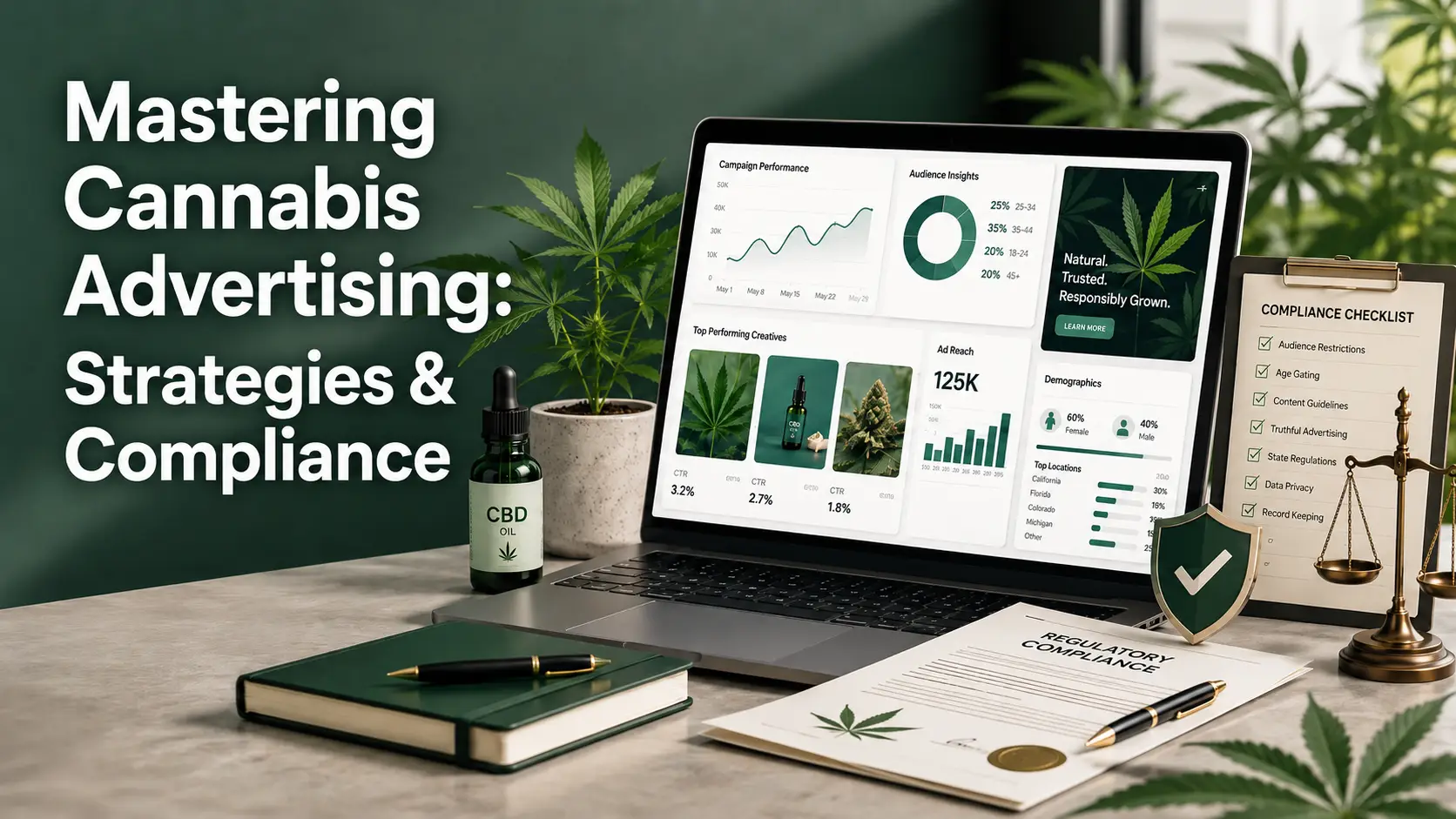
Cannabis Advertising Regulations Advertising compliance is rarely top of mind during the licensing sprint, but regulators in many jurisdictions evaluate marketing language, signage plans, and digital outreach strategies as part of the broader operational narrative — meaning advertising missteps can surface during inspections or renewal reviews long after your doors open. Cannabis advertising regulations operate on two levels simultaneously: state rules that govern placement, content, age-gating, and health claims, and platform-level restrictions imposed by major digital networks that effectively ban direct promotion regardless of local legal status. For newly licensed operators, this creates a practical tension between needing to build awareness quickly and staying well within the promotional boundaries that protect your license. Signage visible from public rights-of-way, loyalty program communications, and even staff-recommended social media posts can all draw regulatory scrutiny if they imply health benefits, target underage audiences, or violate proximity rules tied to sensitive-use buffers you already mapped during site selection. Building a compliant advertising framework from day one — rather than retrofitting it after a warning letter arrives — is the same disciplined approach that separates operators who maintain their licenses from those who lose them over preventable violations.