

Choosing the Best POS System for CBD
Imagine opening your new wellness shop, only to receive a “service terminated” email from your payment provider by noon. Can CBD stores use standard payment gateways? In practice, the answer is almost always no. While the 2018 Farm Bill made hemp products perfectly legal to sell, traditional banks still flag these retailers under a strict restricted business classification, leading to unexpectedly frozen funds.
Surviving this frustrating hurdle means recognizing the massive difference between what is legal retail and what financial institutions actually consider safe. According to industry standards, your shop requires high-risk payment processing integration—a specialized financial toll booth built specifically for industries that banks view cautiously. Choosing the right POS system for CBD isn’t merely about ringing up tinctures; it establishes the resilient digital toolkit needed to shield your storefront from a sudden shutdown.
How High-Risk Payment Processing Protects Your Revenue
When a customer swipes their card, the transaction carries a digital ID tag called a Merchant Category Code (MCC). This number tells banks exactly what you sell. Standard retail codes sail right through, but selling hemp triggers heavy scrutiny. Banks flag these specialized codes, meaning a proper high-risk payment processing integration is the invisible shield keeping your business open.
Routing these flagged funds requires two distinct tools: a payment gateway and a merchant account. Think of the gateway as a secure toll booth transmitting card data, while the merchant account is the vault holding your money before it reaches your bank. Because mainstream platforms routinely ban hemp sellers, finding the best merchant accounts for CBD means securing specialized, separate versions of both systems.
Paying slightly more for this infrastructure is the cost of absolute stability. While you should always work on minimizing high-risk transaction fees by comparing trusted providers, consider this baseline tradeoff:
Standard Processing: Low fees (~2.5%), severe risk of sudden fund freezes, zero CBD support.
High-Risk Processing: Moderate fees (~4%), guaranteed stability for hemp sales, dedicated compliance support.
Once your revenue stream is protected, you must secure your physical storefront using the compliance toolkit: lab results, age checks, and inventory.
The Compliance Toolkit: Lab Results, Age Checks, and Inventory
Securing your bank account is only half the battle; keeping your physical store legally compliant is the rest. During a busy Saturday rush, a cashier could accidentally sell a tincture to a minor. To eliminate this liability, your checkout system needs built-in age verification software for hemp. Instead of relying on a clerk’s mental math, a specialized point-of-sale automatically prompts them to scan a driver’s license before opening the register.
Transparency is what transforms curious shoppers into loyal customers. Since you already know your products require third-party lab testing, the daily challenge is proving it instantly to anyone who asks. A compliant POS handles this regulatory burden through four essential features:
Age verification to automatically lock down restricted transactions.
COA (Certificate of Analysis) integration, utilizing lab results QR code integration to print official lab reports directly on customer receipts.
Automated tax calculation to navigate complex local wellness taxes.
Batch tracking for precise, reliable product histories.
This final feature is your ultimate safety net when managing hemp inventory levels. Rather than just counting how many bottles are on a shelf, batch tracking records the exact manufacturing lot of every item. If a manufacturer recall occurs, you can instantly pinpoint the affected products. This level of oversight requires seed-to-sale tracking software compatibility, verifying your inventory’s legal journey from the farm. With your physical storefront protected, the next logical step is omni-channel syncing: selling CBD online and in-store without getting flagged.
Omni-channel Syncing: Selling CBD Online and In-Store Without Getting Flagged
Running a weekend promo on CBD gummies can quickly become a headache if online shoppers buy stock you already sold in-store hours ago. To prevent this, successful merchants rely on a unified “Digital Shelf.” By utilizing omni-channel retail synchronization for CBD, your software acts as a central brain that automatically updates inventory across both your website and physical shelves in real time, guaranteeing you never sell a product you do not actually hold.
Beyond simply preventing stockouts, connecting your storefronts creates a critical financial safety net. A specialized CBD retailer POS combines every online and offline transaction into one dashboard, drastically simplifying your sales data. Instead of mashing together separate spreadsheets from your e-commerce site and your cash register at the end of the month, unified reporting gives you one accurate record to effortlessly manage complex local wellness taxes and regulatory audits.
That seamless connection ultimately transforms how you reward your returning buyers. When managing customer loyalty programs for hemp brands through a synchronized platform, shoppers can earn points at your physical counter and easily redeem them online later. These protective systems lay the groundwork for a straightforward strategy to select and implement a compliant POS.
Your 3-Step Strategy to Selecting and Implementing a Compliant POS
Checkout technology is much more than a digital cash register; it acts as your primary shield against frozen funds and regulatory headaches. While standard retail setups might seem cheaper upfront, the hidden costs of non-compliant systems frequently lead to sudden merchant account shutdowns. Choosing a stable, industry-specific partner delivers the ultimate “sleep-at-night” factor.
Turn this specialized approach into action by using a practical CBD retail compliance checklist to vet any new platform before signing a contract. Figuring out how to choose hemp retail software is straightforward with this three-step framework:
Confirm hemp-friendly banking: Verify the processor explicitly underwrites high-risk businesses.
Verify compliance features: Look for vital point of sale features for botanical retailers, including built-in lab report storage.
Test hardware integration: Ensure your card readers and inventory scanners communicate smoothly.
Related Topics to Link From This Guide
Does insurance cover medical cannabis? If you’re serving medical customers (or planning to), insurance questions come up fast. Coverage can vary by state rules, the patient’s plan, and the product type, and many purchases are still out-of-pocket even when a patient is registered. The key operational takeaway for retailers is to set expectations at checkout, keep receipts and product details easy to retrieve, and train staff on what they can and can’t promise. (Link this phrase to your deeper explainer on whether insurance covers medical cannabis.)
Best loyalty programs for frequent cannabis purchasers can look similar to standard retail rewards, but the details matter more in regulated categories. A strong program ties points to compliant purchase limits, supports returns/exchanges rules in your area, and avoids messaging that could be seen as targeting minors. Look for a POS that can segment customers (new vs. repeat, product preferences, average basket) and run simple, trackable offers. (Link this phrase to your roundup of the best loyalty programs for frequent cannabis purchasers.)
Cannabis payments are closely related to CBD payments, but the risk profile and available options are often different. Many operators rely on a mix of cash management, compliant debit solutions, ACH, and specialty processing partners that understand the category. If you’re evaluating a POS, make sure it supports the payment methods you plan to offer and provides clear reporting for reconciliation and audits. (Link this phrase to your guide on cannabis payments.)
Cannabis industry market research helps you choose a POS with the right features for where demand is going—not just where it is today. Market data can guide product mix decisions (vapes vs. edibles vs. topicals), pricing strategy, and what integrations matter most (delivery, online ordering, loyalty, inventory). Pairing research with your POS reports also helps you spot trends early at the store level. (Link this phrase to your cannabis industry market research article.)
Cannabis licensing consultancy becomes important when you’re moving from hemp-only retail into licensed THC sales, opening a new location, or changing your business model. Licensing timelines and compliance requirements can shape your POS choice, because you may need specific audit trails, role-based permissions, and reporting formats. Getting licensing guidance early can save you from costly software changes later. (Link this phrase to your cannabis licensing consultancy resource.)
Cannabis tracking system requirements (often called seed-to-sale) are a major difference between hemp retail and licensed cannabis. If you plan to expand, check whether your POS can integrate with your state’s tracking system or common compliance tools, and whether it can manage lots/batches, recalls, and inventory adjustments cleanly. The smoother the integration, the easier compliance becomes during inspections and audits. (Link this phrase to your cannabis tracking system explainer.)
A specialized market requires specialized tools to operate with complete confidence. Start by applying this vetting process to your top software choice today. Prioritizing compliance-ready technology over risky shortcuts builds a more resilient storefront primed for long-term success.
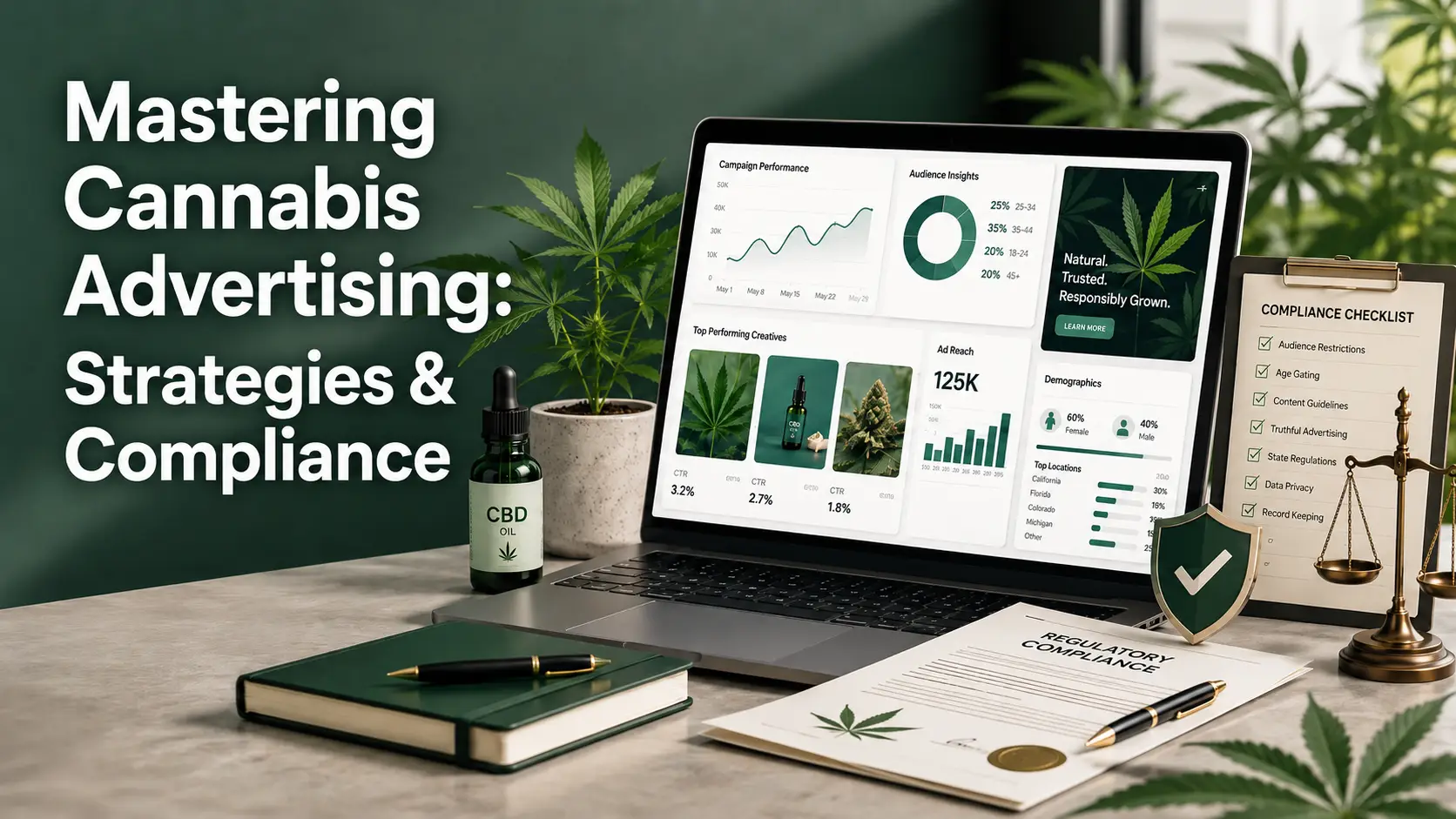
Learning more about cannabis advertising regulations is important for any CBD, hemp, or cannabis-related business that wants to grow without risking compliance issues. Because advertising rules can vary by state, product type, platform, and payment provider, businesses need to understand what claims they can make, how they can promote products, and what restrictions apply to age-sensitive or regulated audiences. This is especially important when choosing tools like a POS system for CBD, since the right system can help support age verification, compliance tracking, receipt records, product information, and safer customer communication. By staying informed on cannabis advertising regulations, retailers can market more responsibly, protect their business, and build trust with customers while staying aligned with industry requirements.