

Navigating Cannabis Marketing: Strategies for Success
Imagine running a billion-dollar business where you are legally banned from using Facebook or Google to find customers. This is the daily reality of the cannabis industry, operating inside a digital “walled garden.” In practice, major tech platforms enforce strict policies that instantly delete accounts for mentioning regulated products.
Picture Nike launching sneakers by simply buying targeted social media ads. A modern dispensary cannot replicate that playbook, because marijuana advertising faces constant platform shadow-bans. Industry data reveals that 90% of traditional ad spend fails in this sector. What works seamlessly for shoes gets a dispensary digitally erased.
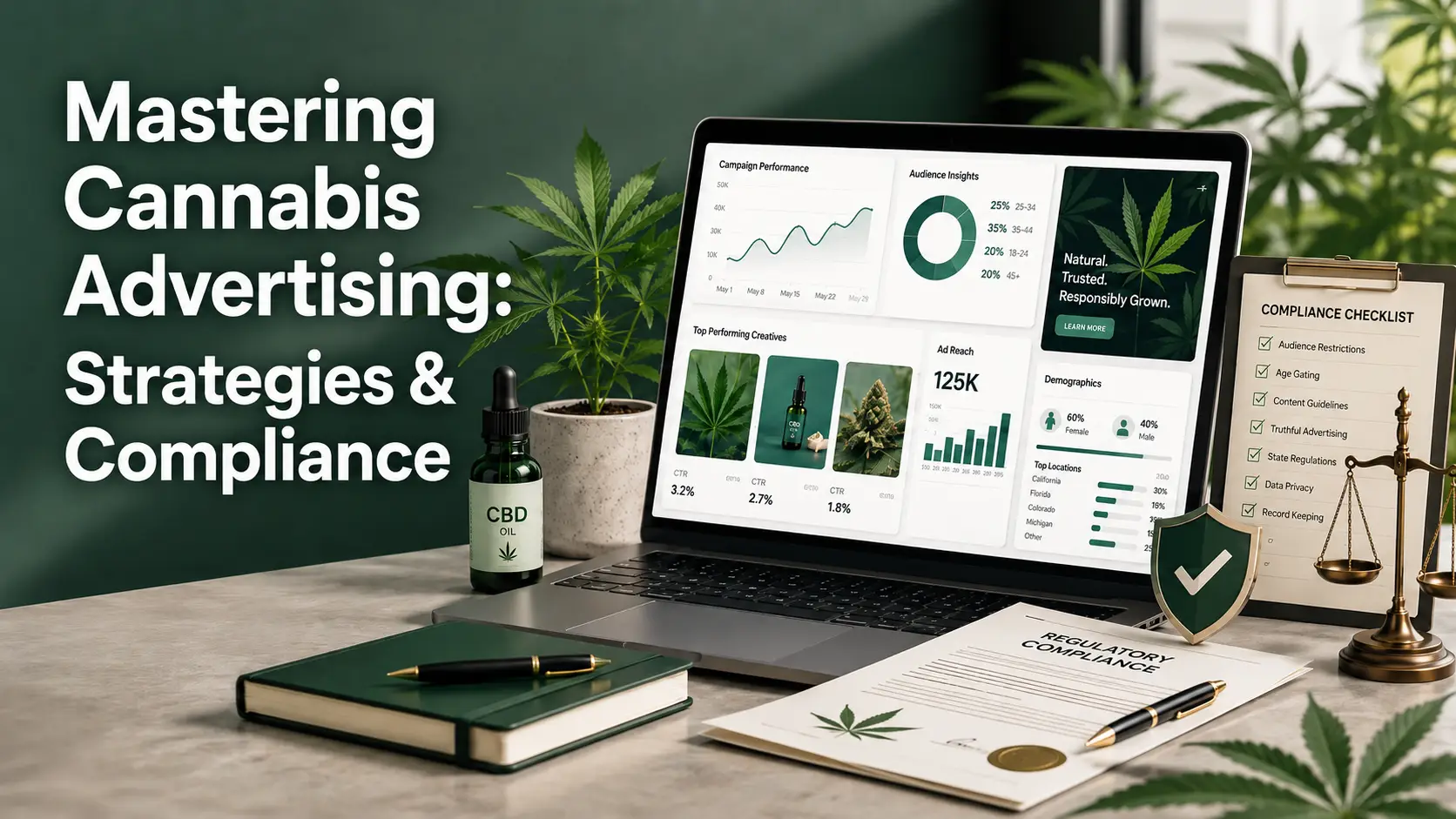
State-mandated promotion rules act as an invisible referee for every brand. Breaking a compliance law you never knew existed does not just ruin a campaign; it can actually revoke your business license. For these companies, marketing is rarely just about creativity. Survival depends on navigating heavily scrutinized, hyper-local regulations.
Since mainstream playbooks are obsolete, the cannabis marketing agency was born out of absolute necessity. Specialized teams bypass digital roadblocks by focusing on three core pillars: compliance, content, and community. According to industry strategists, successful cannabis marketing requires these creative workarounds to build customer trust without triggering devastating platform penalties.
The Cannabis Marketing Agency: Your Guide Through the Regulatory Labyrinth
Running a standard retail campaign can quickly become a liability if using the wrong word jeopardizes a business license. This high-stakes environment is exactly why a specialized cannabis agency exists. While you might see casual hemp promotion running freely across mainstream social media, marketing THC is an entirely different battle. Because hemp is federally legal, it enjoys much looser marketing restrictions. Conversely, THC businesses operate under a microscope, where one non-compliant Instagram post can trigger severe legal penalties or even shut down a storefront.
To survive this regulatory labyrinth, dispensaries and product creators partner with a marketing agency for the cannabis industry instead of traditional firms. These specialized teams operate on three essential pillars to keep their clients protected and profitable:
- Compliance Oversight: Acting as an invisible referee to ensure every piece of content strictly follows complex, state-by-state advertising laws.
- Community Building: Focusing on organic growth, local education, and grassroots connections since traditional paid advertising on platforms like Facebook is largely prohibited.
- Technical Workarounds: Finding safe, cannabis-friendly digital networks to place promotional materials without triggering automated bans from major tech companies.
Mastering these strict compliance boundaries is only the foundation of a successful digital strategy. Once a company secures its legal footing and learns how to navigate the digital restrictions, the real creative work begins. Capturing consumer loyalty in this space requires moving beyond basic identifiers and crafting a marijuana brand identity that lasts.
Moving Beyond the Green Leaf: Crafting a Marijuana Brand Identity That Lasts
Walk into a modern dispensary today, and you might mistake it for an upscale wellness clinic. This transformation is the result of strategic cannabis branding designed to leave the basement behind. Today’s successful companies treat their products like premium lifestyle goods, knowing that mainstream consumers want sophistication rather than outdated counter-culture cliches.
Capturing the rapidly growing demographic of high-spending, 40-plus consumers requires a radical shift in traditional weed branding. Because this mature audience seeks wellness, focus, and relaxation, agencies use three specific visual cues to immediately signal safety: minimalist packaging, clean typography, and muted earth-tone palettes. These intentional design choices mirror luxury skincare aesthetics, completely separating the product from the stigma of illicit markets.
The biggest mistake a business can make with this sophisticated crowd is competing solely on high THC potency, which is a dangerous race to the bottom. If a product relies entirely on strength, buyers will abandon it the second a cheaper alternative appears. Instead, developing a distinctive marijuana brand identity creates lasting emotional loyalty. By promising a reliable, consistent lifestyle experience—such as a calming evening ritual—brands can successfully command premium pricing and guarantee repeat purchases.
Unfortunately, a beautifully designed aesthetic provides no return on investment if targeted customers cannot actually discover it. To survive this digital reality, businesses must master the hidden mechanics of internet search and leverage SEO to generate permanent inbound traffic.
Dominating the Digital Shelf: Why Cannabis SEO is the Secret to 24/7 Traffic
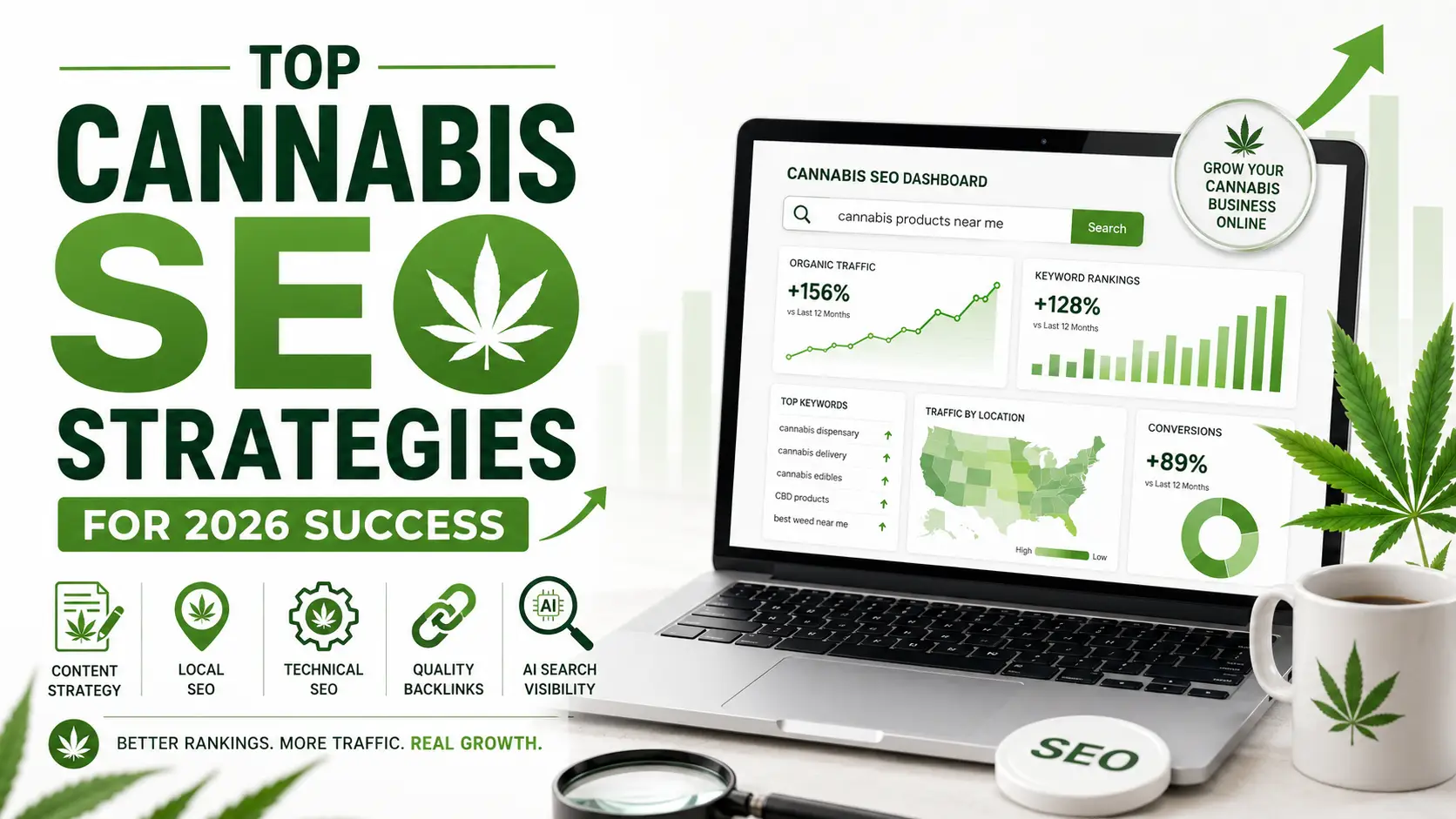
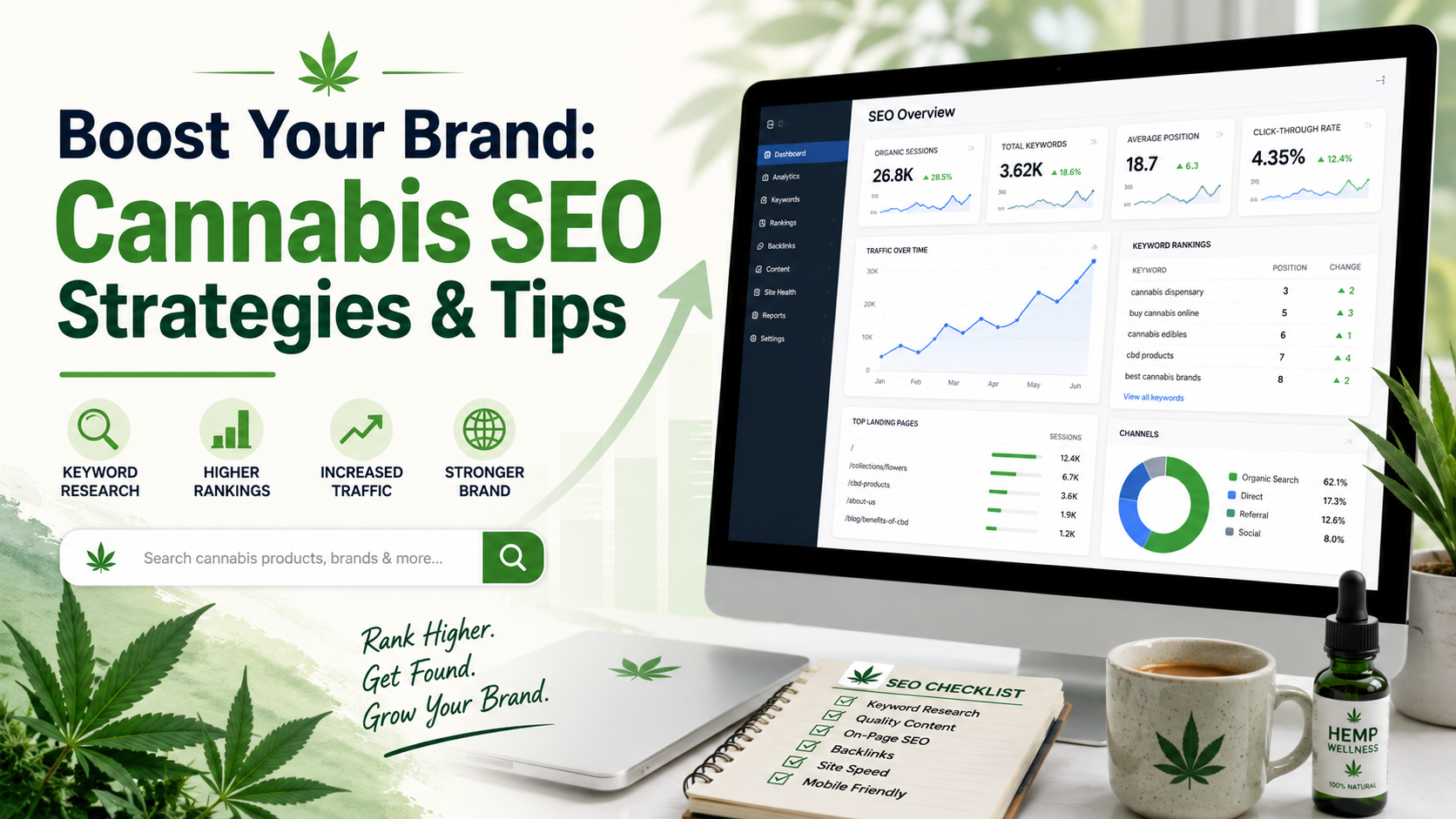
Investing in social media marketing often feels like paying for a digital billboard only to have the city cover it with a tarp the very next day. This is the frustrating reality of cannabis digital marketing, making organic search engine optimization the industry’s most reliable survival tool. Because platforms like Instagram actively shadow-ban these businesses, mastering cannabis SEO becomes the ultimate, penalty-free engine for generating consistent daily revenue.
The secret to this strategy lies in capturing people exactly when they are ready to purchase. While traditional retail brands often waste money chasing general awareness, smart dispensaries focus entirely on high-intent dispensary traffic generation by targeting specific, localized search queries. To intercept these highly motivated buyers, successful campaigns prioritize four essential “high-intent” keywords:
- “Dispensary near me open now”
- “Best cannabis flower for sleep”
- “Order THC edibles online [City Name]”
- “First-time dispensary deals in [Neighborhood]”
Catching that localized traffic requires more than just sprinkling search terms on a homepage. Building a compliant cannabis SEO strategy means structuring a website into “local SEO silos”—organized groups of blog posts that answer specific neighborhood questions while carefully following state health regulations. By perfectly balancing transactional pages (like menus) with educational content (like “How to read product labels”), a business proves its safety and authority to Google without triggering regulatory red flags.
Mastering organic search creates a steady, permanent foundation of inbound traffic, but proactive outreach requires additional tactics. While traditional social media ads remain strictly off-limits, specialized agencies have developed highly technical workarounds to safely buy digital space through programmatic advertising.
Bypassing the Bans: Programmatic Advertising and the ‘Digital Billboard’ Strategy
For a traditional retail brand, launching a digital campaign is as simple as handing a credit card to Facebook or Google. However, hemp and cannabis businesses face a very different reality. Because of strict CBD advertising platform restrictions, attempting to run standard paid social or search campaigns usually results in instant account suspensions. Navigating Google Ads policies for CBD is like trying to solve a maze where the walls constantly shift, leaving legitimate operations locked out of the world’s biggest digital advertising networks.
To bypass these locked gates, specialized agencies rely on a sophisticated workaround known as programmatic advertising for restricted industries. Instead of buying ads directly from a search engine, programmatic technology acts as an automated broker that scans the broader internet for independent websites willing to host cannabis-related messages. Think of this approach like renting digital billboards in real-time, placing your brand’s banners only on websites that explicitly welcome your specific type of product without triggering regulatory alarms.
This strategy unlocks a powerful tactic called “non-endemic” advertising, meaning the ads appear on sites completely unrelated to cannabis. Rather than isolating a brand’s message to niche marijuana blogs, this technology pushes campaigns onto mainstream sports hubs, culinary magazines, or local news portals. By reaching everyday consumers during their normal browsing habits, dispensaries can capture a much wider audience of curious buyers who wouldn’t typically visit a specialized cannabis website.
While buying off-platform digital real estate solves the paid advertising dilemma, brands still need a way to communicate directly with their loyal followers on mainstream apps while protecting their organic reach.
Surviving the Shadow Ban: Protecting Your Organic Reach on Instagram
What if a business’s Instagram account vanished overnight? For traditional retailers, this is a nightmare; for the cannabis industry, it is a routine Tuesday. While paid ads require sophisticated workarounds, maintaining organic reach for cannabis businesses on Instagram demands surviving the “shadow ban.” This occurs when platform algorithms silently hide content for violating unwritten rules, turning a vibrant page into a ghost town. Because Meta’s automated systems cannot distinguish between a state-licensed dispensary and illicit activity, innocent posts routinely trigger catastrophic account deletions.
Navigating this invisible minefield requires stripping traditional sales tactics out of your marijuana marketing playbook. The algorithm hunts for commercial intent, meaning a profile must mirror a lifestyle magazine rather than a product catalog. To keep the digital referee happy, specialized agencies strictly enforce a ‘Don’t Post’ checklist:
- Prices
- ‘Contact for Purchase’ language
- Direct consumption videos
Pivoting to an educational strategy is the best method for overcoming social media shadowbans for weed brands. By highlighting plant science and behind-the-scenes operations, brands build consumer trust without triggering automated alarms. However, because algorithmic purges remain unpredictable, smart businesses always maintain a backup plan by funneling followers to owned email lists. Once a digital audience is secured against sudden platform deletions, the next step is connecting that protected attention to backend retail operations.
From Metrc to Marketing: Scaling Revenue via Automation and Analytics
Securing an audience from sudden social media bans is just the beginning of a modern retail strategy. In cannabis, every product is monitored by state-mandated software called Metrc, commonly known as “seed-to-sale” tracking. While designed purely for regulatory compliance, this massive database becomes a goldmine of consumer insights when properly connected to digital storefront tools.
To leverage these insights safely, businesses must prioritize “first-party data,” which is the contact information they own entirely. Capturing direct phone numbers is especially critical because SMS loyalty programs consistently outperform standard email campaigns in the cannabis space. Without the interference of restrictive algorithms, text messages provide an unfiltered, immediate line of communication to the most dedicated local buyers.
The real breakthrough happens when retail purchase histories speak directly to communication platforms. Proper Metrc integration and marketing analytics reveal exactly what shoppers buy, automatically sending targeted alerts when their favorite items are restocked. This digital handshake is the ultimate secret to scaling cannabis revenue through email automation and highly personalized text messaging.
Complex backend ecosystems like this require specialized technical knowledge that standard digital marketers rarely possess. A dedicated dispensary advertising agency understands how to safely extract regulatory data and translate it into a consumer-friendly loyalty experience.
Boutique vs. Full-Service: Finding the Right Marketing Partner for Your Scale
When entering the regulated market, business owners must decide exactly what a cannabis marketing partner does for their specific stage of growth. New retail shops typically weigh boutique vs. full-service cannabis firms to find their ideal fit. A full-service agency acts as an outsourced, end-to-end marketing department that handles everything from initial branding to digital menu setup, which is ideal for well-funded operations. Conversely, boutique agencies provide specialized consulting—like highly targeted SEO or packaging design—allowing smaller shops to maximize tighter budgets.
Traditional ad agencies often lack the survival skills required for this unique environment, making it crucial to spot “generalist” red flags early. Even top-rated hemp marketing consultants can trigger disastrous compliance failures if they do not understand state-specific rules or complex technical integrations. To vet a potential partner’s true expertise, ask these three critical questions:
- “How do you quickly recover from an unexpected Meta or Google account ban?”
- “Can you seamlessly integrate our point-of-sale system with our Metrc tracking data?”
- “What is your process for verifying state compliance on digital billboard campaigns?”
An experienced team will answer these questions effortlessly, proving they can navigate the invisible referee of cannabis laws without missing a beat. Once an agency capable of safely connecting backend data to creative customer outreach is secured, businesses are equipped to implement a robust growth roadmap.
Your 90-Day Cannabis Growth Roadmap: From Compliance to Conversion
Surviving the digital “shadow ban” requires more than clever workarounds; it demands a fundamental shift in perspective. The days of illicit, underground branding are completely gone, replaced by a sophisticated retail environment where the rules change overnight. This evolution makes the cannabis marketing agency an essential survival guide, steering businesses safely through invisible regulatory minefields.
Turning this high-stakes regulatory knowledge into immediate action requires moving away from reactive approaches and toward a proactive, data-driven growth model. Stabilize operations by executing this 90-day roadmap:
- Month 1 (Compliance/SEO Audit): Secure the website’s legal foundation and optimize for local search to capture customers actively looking for local products.
- Month 2 (Content/Social Setup): Establish a brand-safe digital presence focused on lifestyle and education, avoiding explicit product claims that trigger platform bans.
- Month 3 (Automation/Paid Launch): Deploy targeted retention emails and launch compliant digital billboards on cannabis-friendly networks.
By executing these milestones, budgets are prioritized on the highest ROI channels—specifically SEO and customer retention—establishing a true performance-driven marijuana brand strategy. Instead of wasting resources fighting mainstream platforms that actively suppress visibility, investing in owned digital real estate ensures longevity. Each compliant article published and every loyal customer retained builds a foundation that no algorithm can erase.
Start by auditing your current website to identify any immediate state compliance red flags. The ultimate objective is to build a durable, brand-safe asset capable of surviving inevitable regulatory shifts, establishing a reliable foundation to safely lead the local market.