

Navigating Cannabis Advertising Regulations: A Guide
Have you ever wondered why you see an endless parade of beer commercials during the Super Bowl, but never a single commercial for a local dispensary? It is a jarring contrast. In many states, buying cannabis is now as routine and legal as picking up a six-pack or a morning coffee, and you might easily drive past a bustling shop on your neighborhood corner. Yet, despite this mainstream retail presence, cannabis advertising remains virtually invisible on major television networks. According to marketing industry analysts, this glaring absence is not caused by a lack of budget, but rather by a uniquely tangled legal web.
The primary culprit behind this marketing mystery is a massive legal gap between state and federal law. Because national broadcasters and social networks operate across state lines and fall under federal jurisdiction, marijuana advertising is treated as a severe liability. For the local businesses simply trying to announce a weekend sale, navigating pot advertising becomes a daily tightrope walk.
The rules shaping cannabis advertising regulations are fought across three main battlegrounds: digital platforms, physical locations, and strict content limitations. Tech companies enforce total bans to protect their ecosystems, physical billboards face strict location limits to shield minors, and specific health claims remain completely off-limits to satisfy federal regulators.
The ‘Two Bosses’ Conflict: Why State Legality Doesn’t Equal Advertising Freedom
Dispensary owners operate in a reality where two authorities give completely opposite instructions. While local state governments might give them the green light to sell, the federal government still considers the product illegal. This conflict explains why you can watch a football game flooded with beer commercials but will never see a thirty-second spot for a local cannabis shop. Television and radio stations rely on federal licenses to operate.
The Federal Communications Commission (FCC) acts as the ultimate authority over those public airwaves. Since the FCC is a federal agency, any broadcaster airing a commercial for a federally banned substance risks massive fines or losing their broadcast license entirely. Following strict legal cannabis advertising rules isn’t just a preference for these networks; it is a basic survival mechanism. Broadcasters simply cannot afford to anger their federal boss, no matter how much money a state-legal dispensary offers for ad space.
Stepping away from television doesn’t make things much easier, primarily due to the “interstate commerce” trap. If a dispensary runs an online ad or a digital billboard that accidentally reaches consumers in a neighboring state where cannabis remains prohibited, they have suddenly crossed federal lines. Creating a foolproof state-by-state cannabis compliance guide becomes a massive headache when a single misdirected internet promotion can turn a legal local sale into a federal offense.
Protecting a hard-won business license forces shop owners to be incredibly cautious about who actually sees their marketing. Yet, even when businesses successfully avoid federal broadcast regulators and accidental border crossings, their advertising journey is far from over. Making sense of cannabis advertising laws takes another tricky turn when private tech companies enter the picture, perfectly explaining why platforms like Meta and Google maintain such strict digital walls.
The Digital Wall: Why Meta and Google Stay Strict on Cannabis Content
Escaping federal broadcast regulators doesn’t guarantee a clear path online. Platforms like Facebook, Instagram, and Google operate like private clubs, meaning they can enforce rules far stricter than any government law. When businesses explore cannabis digital advertising, they aren’t just dealing with state guidelines; they are legally bound by a tech company’s Terms of Service (ToS). Because these global giants manage billions in credit card payments and cater to family-friendly sponsors, they aggressively block federally illegal products to protect their own ecosystems, regardless of local state laws.
Officially, paid ads for THC products on social platforms are completely banned, but shops still try to run free community pages. This often triggers a frustrating penalty known as “shadowbanning.” This invisible restriction occurs when a platform’s algorithm secretly hides a profile’s posts from the public feed because the content bends internal guidelines. Without any warning, shop owners routinely wake up to find their brand pages permanently deleted because they stumbled into three common digital traps:
Posting product prices or specific discounts in captions, which algorithms interpret as facilitating an illegal digital drug sale.
Including direct links to an online purchasing menu right in their profile bio.
Using popular but heavily monitored industry hashtags that automated safety filters instantly flag and remove.
While social media acts as a tightly closed door, search engines present a slightly different puzzle. The current Google Ads policy for hemp and CBD has cautiously opened up, allowing certified brands to run limited campaigns for non-psychoactive products, though traditional THC remains strictly banned from paid search results. Finding themselves heavily restricted across the digital landscape, shop owners inevitably look back to the physical world, leading straight into the complex zoning rules that govern real-world billboards and promotional balloons.
Billboards and Balloons: Navigating Strict Physical Signage Limits
Driving down the highway, you might spot a giant advertisement for a local shop, but you will never see one parked next to a high school. This is due to strict billboard limitations for cannabis brands, which usually enforce a “1,000-foot rule.” State regulators mandate a massive buffer zone around sensitive locations like schools, public parks, and community libraries to ensure passing kids aren’t routinely exposed to adult products.
Navigating these state-level buffer zones is just the first hurdle, because individual towns often pile on their own restrictions. Through local zoning laws for cannabis signage, a city council can completely override state permissions. If a community decides they do not want glowing green crosses or massive highway signs within city limits, they simply rewrite their local rulebooks to ban that physical advertising altogether, regardless of what the state allows.
Beyond the billboards, the actual storefronts face surprisingly specific restrictions designed to eliminate anything resembling a carnival atmosphere. You will rarely see inflatable tube men dancing in the parking lot, colorful promotional balloons, or energetic sign-spinners on the corner. Standard dispensary advertising rules strictly prohibit these flashy, attention-grabbing tactics because they naturally appeal to minors, forcing businesses to maintain quiet, unassuming exteriors instead.
Regulating where a sign goes and how it physically moves is ultimately just the foundation of consumer protection. Once regulators lock down the physical location of an ad to keep it far away from children, they immediately turn their microscopes onto the exact messages printed on the vinyl. This intense scrutiny dictates everything from the specific fonts a brand chooses to the promises they make to consumers, leading straight into the complex web of forbidden words and banned colors.
Forbidden Words: Why Health Claims and Kid-Friendly Colors are Banned
Walking into a modern dispensary feels more like entering a high-end tech store than a candy shop, and that is entirely by design. Regulators fiercely penalize prohibited cannabis marketing to minors, forbidding any visual element that might inadvertently catch a child’s eye. This “attractive to minors” doctrine officially bans cartoon characters, bright neon colors, and playful bubble fonts. To meet compliant packaging and labeling standards, brands must intentionally adopt mature, minimalist aesthetics that clearly signal the product is exclusively for adult use.
These strict visual limitations are matched by a heavy regulatory blanket over what a company can actually say. Even if a customer swears a specific gummy fixed their bad back, the brand cannot legally advertise that success story. This is the “FDA Wall.” Because the federal government regulates medicine, claiming a product “cures” or “treats” a specific condition requires rigorous scientific proof and official health claim substantiation. Under strict FTC guidelines for CBD and THC products, making unproven medical promises can quickly trigger massive fines or business closures.
Navigating this boundary forces companies to rely on general “lifestyle” marketing rather than specific medical advice. The difference between an illegal, unsubstantiated health claim and acceptable promotional language comes down to lifestyle enhancement versus medical treatment:
Don’t Say: “Cures chronic insomnia.” vs. Say This: “Promotes a relaxing evening.”
Don’t Say: “Treats arthritis joint pain.” vs. Say This: “Supports daily bodily comfort.”
Carefully choosing acceptable fonts and avoiding medical promises ultimately only solves half the advertising puzzle. Once a brand crafts a perfectly compliant message, regulators demand mathematical proof that the people viewing it are actually old enough to buy the product. This challenge pushes marketers into the complex world of digital demographics, leading directly to the necessity of mastering the 71.6% rule: how brands prove they only target adults.
Mastering the 71.6% Rule: How Brands Prove They Only Target Adults
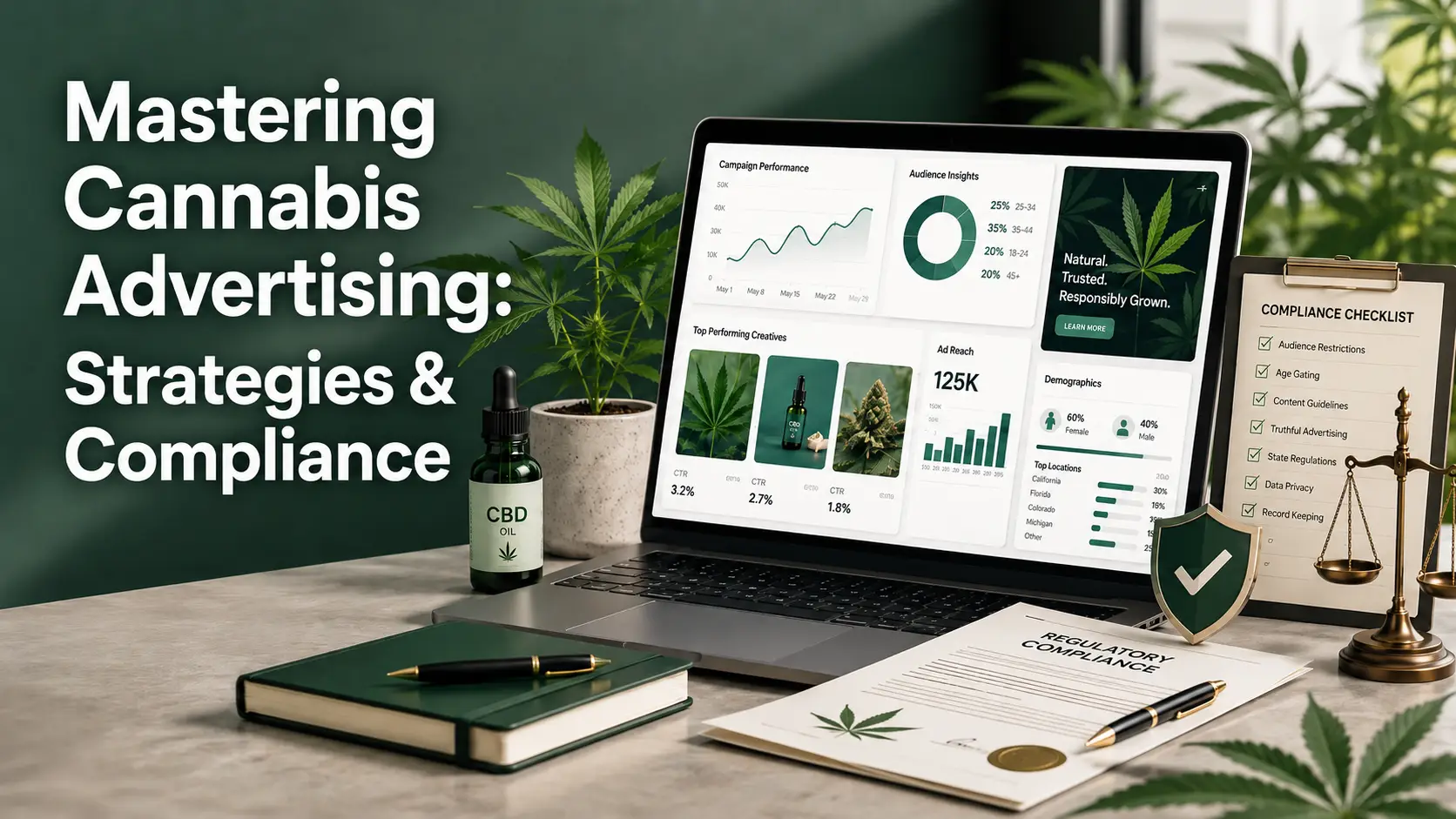
Almost every time you visit a cannabis brand online, a popup halts your progress, asking you to confirm you are at least 21. While clicking “yes” feels like a laughably flimsy security measure, strict age-gating requirements for weed websites establish a legal first line of defense. By forcing users to self-identify, companies demonstrate to regulators that they are actively trying to keep minors out, even if the digital lock is incredibly easy to pick.
Beyond that simple popup, the real compliance work relies on rigid mathematics. When targeting adult audiences for cannabis promotions, brands cannot just guess who is looking at their banners. They must prove with demographic data that at least 71.6% of the ad’s viewers are over 21. Regulators didn’t pull this number out of thin air; it precisely mirrors the actual percentage of legal-aged adults in the United States population, establishing a baseline to ensure kids aren’t the primary audience.
Hitting that exact percentage across the internet requires sophisticated technology. This is where programmatic advertising for the marijuana industry comes into play. Just as cookies track your browsing habits to follow you with ads for shoes, programmatic software uses similar data to verify a user’s age bracket in milliseconds. This automated system ensures a dispensary ad only appears on a mainstream sports blog if the software mathematically confirms the specific person reading that article is an adult.
Armed with this invisible data exchange, businesses stay out of immediate legal trouble while safely reaching everyday consumers. However, mastering today’s digital demographic tools is only a temporary victory in an industry where the goalposts constantly move. As the gap between state systems and federal oversight narrows, companies must look ahead to future-proofing operations by staying compliant as federal laws evolve.
Future-Proofing Your Brand: Staying Compliant as Federal Laws Evolve
Navigating these rules isn’t just about dodging fines; it is about building a durable brand that will outlast current restrictions. As federal laws shift-such as the potential move to Schedule III-cannabis TV and radio spots could eventually become as common as beer commercials.
Until those federal airwaves open up, smart businesses focus on what they can control rather than battling social media bans. Prioritizing owned media over rented media creates a direct line to customers that a sudden platform update cannot erase. A stable marketing approach relies on three core pillars:
Search Engine Optimization: Build a reliable website foundation, which remains the most stable digital marketing strategy for legal dispensaries.
Email and SMS: Collect first-party data to guarantee direct audience access without algorithmic interference.
Content Marketing: Focus on local community education to promote a dispensary legally and authentically.
For teams that want additional, specialized support, it can help to consult industry resources and services focused on compliant growth, such as Top Cannabis Business Consultants, Cannabis PR Mastery, and Cannabis Dispensary Marketing.
When navigating marijuana marketing laws, success hinges on a simple rule: exclusively target adults and never make medical claims. By maintaining direct communication channels and prioritizing compliance, brands can secure their foothold in a heavily regulated landscape while preparing for future expansion.